BIODIGESTERS
What's a Biodigester?
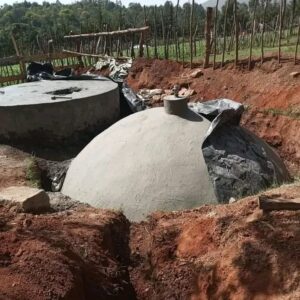
It's an on-site solid waste and waste water management system.
How it works
Three principles are applied in the biodigester technology;
i. Biodegradation.
ii. Displacement.
iii. Separation.
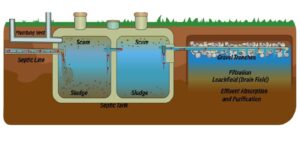
After solid waste is flushed from the toilets, it gets to the biodigester through the drainage system and gets broken down into water and gases through anaerobic and aerobic process and with the help of Enzymes and that bio-process is known as BIODEGRADATION.
The effluent water then leaves the biodigester through the outlet and gets disposed to the soakpit through a process called DISPLACEMENT to be soaked by the ground OR can be treated and re-cycled.The gases are suspended on the upper ¼ part of the outlet.
SEPERATION principle comes to play when Grey water i.e (contamintated oily and soapy waste water) from kitchens,bathrooms,laundry is seperated and disposed into the soakpit through the Grease Trap.
Note
Dark water i.e water that's has come into contact with excretory waste AND Grey water i.e contaminated oily and soapy waste water should be disposed separately.
Advantages
📌 Tested & Approved by NEMA.
📌 Doesn't produce flies attracting foul smell.
📌 No frequent blockages and manholes overflows
📌 Saves time as it's quick & easy to install.It takes 3-5 days to install.
📌 Saves compound's space as it requires little space to install.
📌 Economical compared to ordinary septic tanks & pit latrines.
📌 No fill ups which means no exhauster services are required.
📌 Made of reinforced concrete which guarantees you longevity compared to plastic bio tanks.
📌 Concrete Biodigesters are leakproof meaning they can do well in areas with temporary high water table.
📌 Zero maintenance costs apart from following the proper dosage sequence and cleaning the grease trap once in every 2yrs.
📌Proper dark water treatment & grey water separation and disposal ensures it doesn't produce sewage(contaminated waste water)
Maintenance
- Maintaining a proper enzymes dosage sequence.
- Cleaning the grease trap every 2yrs.
Application
Homes, Apartments, Farms, Hotels, Schools, Hospitals, Petrol Stations, Places of Worship etc
BIOFILL DIGESTER TOILET
What's a Biofill digester toilet?
The Biofil digester is a passive decentralized wastewater treatment system that uses aerobic decomposition and macro-organisms to break down waste. The typical digester accommodates 10 users and can be scaled to meet larger waste demands.
How it works
A Biofill biodigester toilet operates by using a natural process called anaerobic digestion,where bacteria break down human waste within a sealed chamber.
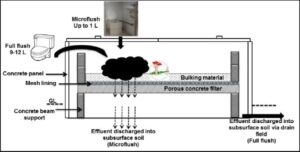
The anaerobic process converts the waste and bulking material into organic manure and the treated water can be safely disposed in the soakpit or reused.
Note
Not all materials can be effectively digested by the bacteria so proper waste disposal practices are crucial.
Advantages
📌 Eco-friendly.
📌 Requires less space to construct & install.
📌 Doesn't fill up which means no exhaustion is required.
📌 Quick & easy to install.(Takes 3 days to complete)
📌 Works well with both flush toilet & non-flush(dry) toilets.
📌 Reduces the necessity of manholes & pipework hence saving on sanitary drainage.
📌 Economical compared to Biodigesters,Septic tanks & Pit Latrines.
📌 Reduces the amount of water used in flushing toilets thus helping in water conservation.
Maintenance
- Regular monitoring of the system is necessary to ensure optimal performance and proper bacterial activity.
Applications
Homes, Apartments, Farms, Hotels, Schools, Hospitals, Petrol Stations, Places of Worship etc
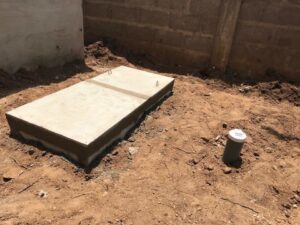
SBR WASTE WATER TREATMENT & RECYCLING SYSTEM
What's SBR system?
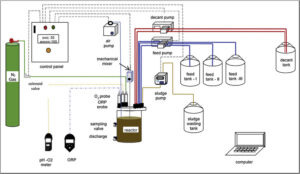
A Sequencing Batch Reactor or simply SBR system treats wastewater in batches. SBRs are a type of activated sludge system that use a single tank to treat wastewater.
How SBRs work
Wastewater is pumped into a tank containing biomass. The wastewater is treated to remove undesirable components and filtered through 4 chambers.
The wastewater is settled and decanted.It thens rests in the reservoir and then the next batch is treated.
Advantages
📌 Flexibility: SBRs can treat a wide range of wastewater types, from very strong to very dilute.
📌 Small footprint:SBRs can be located on a small area of land.
📌 Cost effective: SBRs can save on capital costs by eliminating clarifiers and other equipment.
📌 Efficient operation: SBRs are operated by air power, which reduces maintenance and replacement costs.
📌 Low organic compounds: SBRs produce effluent low in organic compounds.
📌Adaptable:They can be easily modified for nutrient removal in the future.
📌 Can store effluent at peak periods and treat it in smaller batches throughout the day.
📌 Can be expanded: SBR systems can be expanded by adding additional reactors.
📌 SBRs are well suited for wastewater with low or intermittent flow.
📌 They're energy efficient because they only aerate when needed.
Maintenance
- Inspections: Check for cracks and leaks, measure sludge and scum layers, and check for odors
•Pumping:Pump the SBR tank if needed - Cleaning: Clean the effluent filter in the outlet pipe.
- Sensors: Install and reprogram sensors to improve operability
- Control panels:Replace parts and reprogram PLCs
•Diffusers: Replace fine pore diffusers every four to seven years - Jet aerators: Flush jet aerators monthly
- Jet recirculation pumps: Change oil or bearings occasional
Application
Treating municipal & industrial wastewater.
Treating wastewater to reduce organic matter.
Treating wastewater from anaerobic digesters or mechanical biological treatment facilities.
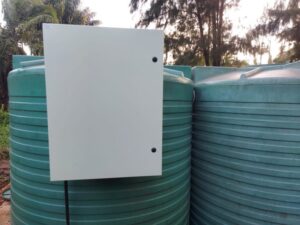
ABR WASTE SYSTEMS
What's an ABR waste system?
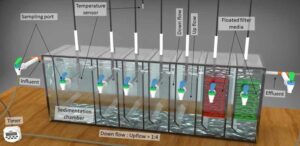
An anaerobic baffled reactor (ABR) is an improved septic tank with a series of baffles under which the wastewater is forced to flow. The increased contact time with the active biomass (sludge) results in improved treatment. Resistant to organic and hydraulic shock loads.
How it works
The baffles create multiple stages within the reactor, forcing wastewater to flow under and over them, maximizing contact time with the anaerobic bacteria present in the sludge blanket.
This allows efficient removal of organic pollutants by anaerobic bacteria,resulting in a high level of biological oxygen demand (BOD) reduction while producing minimal sludge.
Advantages
📌 Stability against shock loads:
ABRs can withstand significant fluctuations in wastewater flow and organic loading without disrupting the treatment process, making them suitable for inconsistent waste streams.
📌 Low sludge production:
Due to the design with baffles, ABRs promote good biomass retention, resulting in less excess sludge generation compared to other anaerobic systems.
📌 Low operational costs:
With minimal moving parts and no need for mechanical mixing, ABRs require less energy and maintenance, lowering operational expenses.
📌 Simple design:
The basic structure of an ABR is relatively straightforward, making it easier to build and manage compared to more complex systems.
📌 High void volume:
The baffles create a high void volume within the reactor, allowing for better contact between the biomass and organic matter, leading to improved treatment efficiency.
📌 Flexible application:
ABRs can be adapted to treat various types of wastewater, including domestic sewage, industrial wastewater, and agricultural waste.
📌 Long biomass retention time:
The design allows for longer retention times of the microbial population, enhancing treatment efficiency.
📌 Potential for biogas production:
Like other anaerobic systems, ABRs can produce biogas, a renewable energy source, from the breakdown of organic matter.
Maintenance
- Check for solid waste: Check the system monthly for solid waste
- Monitor sludge levels:Monitor sludge levels every six months
- Desludging:It's required every 2-4yrs depending on sludge accumulation
- Check for watertightness:Check the tanks from time to time to ensure they are watertight
Applications
Treating a variety of wastewaters including domestic sewage, industrial wastewater and agricultural wastewater.
Biogas System
What's a Biogas System?
Biogas is a renewable energy source produced by the breakdown of organic matter such as food scraps and animal waste.
How it works
Organic waste such as food scraps, animal waste or agricultural by-products is collected, in an enclosed environment without oxygen.
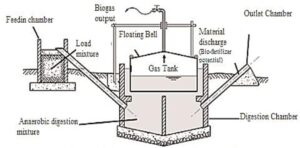
Microorganisms break down the waste through a process called anaerobic digestion. The resulting biogas is captured and used as fuel.
Advantages
📌 Eco friendly
📌 Renewable source of energy
📌 Requires low capital investment
📌 Minimises over reliance on fossil fuels
📌 Produces enriched organic manure which can be used as a perfect supplement or replacement for chemical fertilizers
📌 Doesn't depend on weather patterns, hence more reliable compared to other sources of renewable energy like solar & wind.
Applications
Cooking gas production.
Generate electricity for lighting, operating appliances etc
Heating instruments like hot water shower,home heaters etc.
It can replace compressed natural gas for use in vehicles and running machinery like chaff cutter etc